Why install a sanitary expansion tank?
The sanitary expansion tank is an essential element to protect your hot water system. It is designed to compensate for pressure variations caused by the heating of the water in your water heater. Without it, the increase in temperature leads to a rise in pressure that can damage pipes, the safety group, or even the hot water heater itself.
Unlike the heating expansion tank (used for radiator circuits), the sanitary tank is specifically adapted for drinking water circuits. It absorbs excess water when it expands, thus preventing leaks or damage to your system. It may happen that the tank shows signs of malfunction: bubbling noises, leaks, or deflation. In extreme cases, an explosion may occur, although this is quite rare.
An essential role for your water heater
When cold water enters your water heater, its temperature typically rises from 10 to 15°C to a set point temperature between 60°C and 80°C. This increase causes the volume of water to expand — by up to an additional 3% — that the tank cannot contain. This is where the sanitary expansion tank comes into play: it temporarily stores this excess water, thus preventing any overpressure or uncontrolled drainage through the safety group.
To simplify, it's a bit like heating water in a closed pot: without an escape route, the water spills over. The tank acts as a buffer here. In its absence, each bath or shower wastes several liters of hot water, in addition to exerting unnecessary pressure on your installations.
How to choose the right sanitary expansion tank?
A sanitary expansion tank consists of a metal outer shell and a flexible membrane that expands with pressure. It must be pre-inflated with air or nitrogen to operate effectively. Its proper functioning depends on the maintenance of the water heater: regular descaling and replacing the anode every 10 to 15 years are highly recommended.
Among modern alternatives, there are Pneumatex type tanks from the brand IMI. They stand out for their compactness and ultradurable food-grade rubber membrane, without a rigid metal structure. These models are designed to last while taking up less space.
What to know before installation
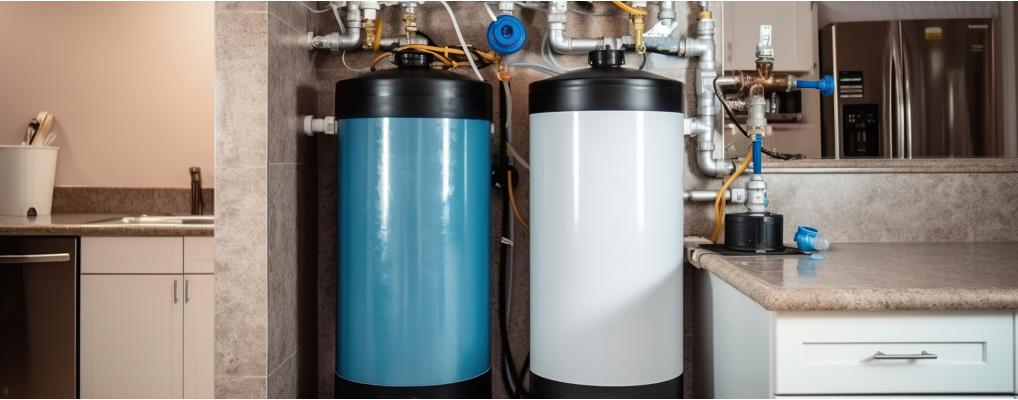
Sanitary tanks are generally white, while heating tanks are red, or even blue or gray. Be careful not to confuse them! The color can be a good indicator, but always check the intended use.
The safety group is another key component of your water heater. It acts as a relief valve when the pressure becomes too high. However, only the expansion tank can permanently absorb the expansion of the water. Together, they ensure the safety and longevity of your sanitary installation.
What capacity to choose for your sanitary tank?
The choice of a tank depends on two elements: the capacity of your water heater and the heating temperature. Each temperature corresponds to a water expansion coefficient:
- 50°C: 0.01206
- 60°C: 0.01206
- 70°C: 0.023
- 80°C: 0.02899
To determine the required volume, simply multiply this coefficient by the volume of the tank. For example, a 200-liter tank heated to 70°C requires:
200 × 0.023 = 4.6 liters → Plan for a 5-liter sanitary expansion tank.


 Pièces détachées Saunier Duval sur Expertbynet.fr