The Heating Circuit
Overheat Thermostat
Also called a thermistor or klixon, it ensures that the water flowing through the heating circuit does not get too hot. If the heat exchanger creates too much heat, it trips, and the boiler goes into safety mode.
Negative Temperature Coefficient (NTC) Heating
The Negative Temperature Coefficient (NTC) safety device is also a thermistor because it varies the temperature in conjunction with an electrical circuit. It is located on the closed circuit of the boiler, just before the heating water passes near the burner. You also find the term NTC, although it is the English designation.
Its location is strategic: the gases expelled by the boiler's burner heat the water in the heating circuit. If this heat is excessive, the temperature safety device activates to prevent the water from carrying too many calories.
Heating Relief Valve
Generally, this valve is designed to absorb up to 3 bars of pressure, hence its name: 3 bar valve. This safety feature is necessary to prevent overpressure in the heating circuit: it absorbs the pressure and allows excess water to flow out when there is a problem.
Expansion Vessel
Like the heating relief valve, the heating expansion vessel withstands pressure in the closed circuit and prevents overpressure or underpressure from damaging the boiler's spare parts and piping.
Pressure Switch
When there is not enough water in the closed circuit of the boiler, heat does not transfer, and water does not flow. The heating water pressure sensor, also called low water safety, signals the pressure issue to the circuit board, which will relay it in the form of an error code.
To understand the error code of the boiler, refer to its manual.
The Hydraulic Part
Disconnecter
The sludge present in the heating circuit contains various particles and algae that can be harmful to your health. This safety device prevents the domestic hot water (ECS) from mixing with the heating water, ensuring that tap water remains potable.
Sanitary NTC
Just like the heating NTC, it is also referred to as NTC. The ECS safety feature ensures that the water exiting the sanitary exchanger is at a reasonable temperature to prevent burns when you take a shower or wash dishes.
Sanitary Flow Detector
Among the hydraulic components, the ECS flow meter checks that the flow from the municipal water supply is adequate for the boiler. If the flow is insufficient, cavities may form in the pipes leading to the faucets in various rooms. Cavitation can damage the pipes.
Sanitary Valve
Unlike the heating relief valve, the 7-bar valve (or sometimes 8 bars) prevents excessive pressure in the Domestic Hot Water system. Excess pressure would damage the hydraulic components of your boiler and the associated piping.
The Gas Circuit and Smoke Evacuation
Control Box
This device checks the amount of gas flowing through the gas block of the boiler before reaching the burner and ensures that there are no leaks. When gas passes without the authorization of the boiler's circuit board, the control box signals an anomaly, and the boiler shuts down.
Ionization Probe
When the ignition electrode creates an electric arc to ignite gas in the boiler's heat exchanger, the ionization probe checks for the presence of flame in the heat exchanger. If there is no flame, it goes into safety mode.
SPOTT Probe
Far from some Science Fiction series, this refers to a Thermal Draft Observation System. In slightly more conventional terms, this probe detects carbon monoxide (CO2) particles emitted from the boiler. It ensures that there are no harmful emissions in the home. It is located near the extractor or smoke evacuation.




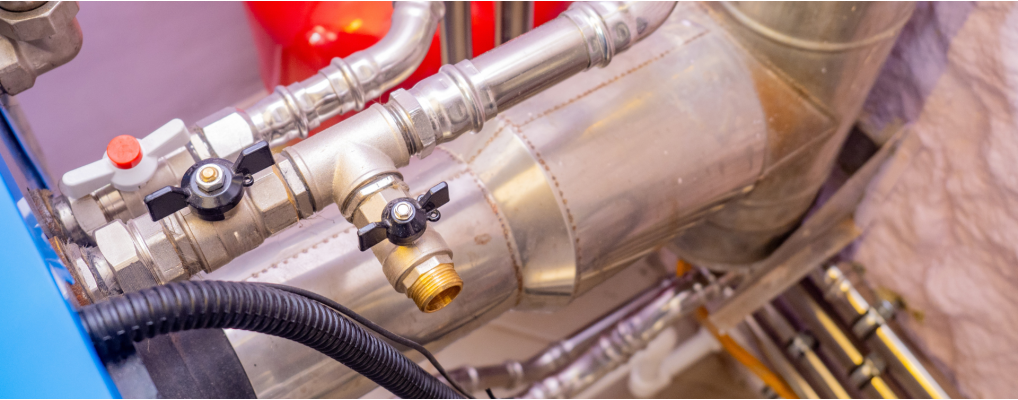
 Pièces détachées Saunier Duval sur Expertbynet.fr