Every year, it is recommended to check your heating system before the arrival of winter.
This preventive maintenance is best carried out at the beginning of autumn so that any issues can be identified and resolved in time.
Here are some actions we recommend to help you get through the winter in maximum comfort.
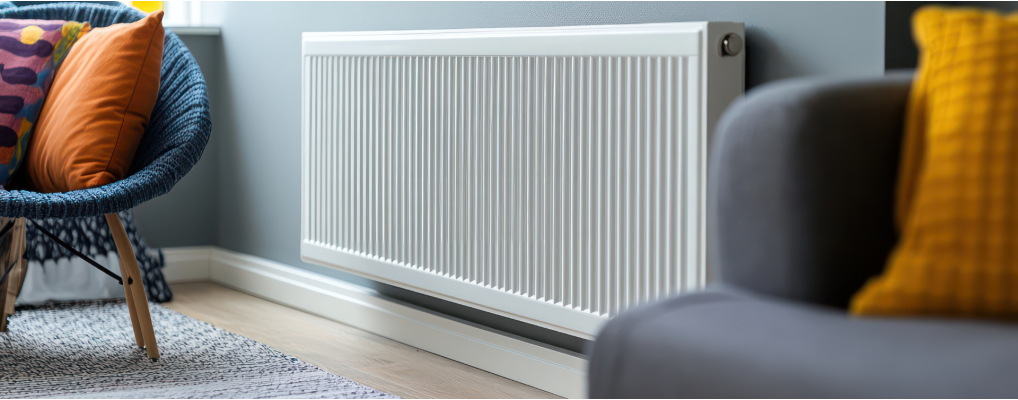
1. Bleed your radiators: not mandatory, but highly recommended
It is recommended to bleed all your radiators once a year, at the beginning of autumn, before restarting the boiler.
Why is it important to bleed radiators?
To ensure optimal comfort during winter, check your radiators to improve heating efficiency and avoid heat loss.
Bleeding radiators removes the air trapped in the heating system. The presence of air prevents proper water circulation inside the radiators.
From an economic perspective, bleeding your radiators can help reduce energy consumption.
How to bleed radiators?
You can bleed your radiators yourself. To do this, take a container and a radiator key (or a flat-head screwdriver).
Then:
- Turn off the boiler or switch off the circulation pump.
- Wait about 3 minutes to allow air and water to separate.
- Place your container under the bleed valve.
- Using the key or screwdriver, slowly open the bleed valve (counterclockwise).
- You may hear a hissing sound as the air escapes.
- Once water starts to flow steadily, close the valve.
2. Carry out a full boiler service
Boiler maintenance is mandatory once a year in France.
This maintenance includes checking, cleaning the appliance, and ensuring proper evacuation of combustion gases. Do not neglect it, as poor maintenance can lead to carbon monoxide poisoning.
The service must be carried out by a qualified professional, who will provide a maintenance certificate within 15 days after the visit.
3. Check the boiler pressure before starting it
Did you know that the pressure in your heating system can decrease over time? A drop in pressure can reduce your boiler’s efficiency or even stop it completely.
To check the pressure, simply look at the gauge on your boiler. It should generally be between 1 and 1.5 bar.
This check is especially important after bleeding your radiators, as some water is lost during the process.
If the pressure is too low, add water by opening the filling valve located under the boiler (refer to the manufacturer’s instructions), while monitoring the gauge. Once it reaches between 1 and 1.5 bar, close the valve.
4. Check your room thermostat batteries
If your thermostat runs on batteries, replace them once a year.
If you do not have a room thermostat, we recommend installing one, as it helps save energy.
Increasing the temperature by just one degree results in 7% more energy consumption.
5. Check the circulation pump
Make sure the pump is working properly, as it may become blocked over time.
To unblock it:
- Turn off the boiler.
- Unscrew the central screw on the pump.
- Using a flat-head screwdriver, turn the shaft located behind the screw.
- Be careful, as some water may leak out.
- Replace the screw and restart the boiler.
It is advisable to have a cloth ready, as some water may escape from the circulator.
Restart the boiler in heating mode and check that the pump operates correctly. Some pumps have an automatic bleed valve—ensure it is slightly loosened.
Don’t hesitate to visit our heating category to find all the products you need.


 Pièces détachées Saunier Duval sur Expertbynet.fr